We are delighted to announce Dr Georgia Colleluori as a touchENDOCRINOLOGY Future Leader 2026, recognized for her emerging contributions to obesity, metabolism, and adipose tissue biology.
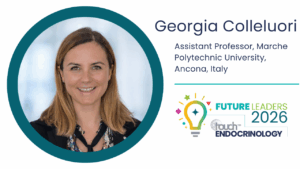
We are delighted to feature Dr Georgia Colleluori as a touchENDOCRINOLOGY Future Leader 2026, recognized for her contributions to metabolic and obesity research. Dr Colleluori is an Assistant Professor at Marche Polytechnic University, Italy, and an Early Career Board Member of the European Association for the Study of Obesity (EASO). A biologist by training, she has built an international research career focused on the endocrine regulation of metabolism, with particular interest in adipose tissue biology, obesity and metabolic disease.
In this interview, she reflects on the moment that inspired her to pursue endocrinology, discusses key milestones in her career, including receiving a Rising Star Award from the European Foundation for the Study of Diabetes, and shares her advice for aspiring endocrinologists and researchers.
New insights are added regularly, covering a broad range of subspecialties and evolving clinical scenarios. Sign up below for Free Access to the latest clinical updates in your specialty!
What inspired you to pursue a career in endocrinology?
That’s a nice question. When you are studying at university, you can actually do multiple things. I graduated in Food Science and Human Nutrition. I’m a biologist with a three-year bachelor’s degree plus a two-year master’s degree, which was completely dedicated to this topic. I’ve always been interested in studying metabolic diseases.
I perfectly remember where I was sitting, and in which room I was, when my professor spoke for the first time about leptin. This hormone, produced by adipose tissue, could actually influence your behavior, eating behavior and energy balance. That’s something that really triggered something in me. I can’t tell you it was a very emotional moment, but I believe that was the moment I realized there was something that was really very interesting to me.
I became fascinated by hormones secreted by tissues that, at the time, were mainly thought of as having structural or metabolic functions, such as adipose tissue. Learning that these hormones can communicate with the brain and shape several behaviors, as well as regulate metabolism throughout the body, completely changed the way I thought about physiology. That’s what really sparked my interest in this field.
What has been the most rewarding moment in your journey so far?
There have been a lot of different milestones throughout my career, and I remember experiencing each of them with a lot of excitement.
When I graduated, I moved to the United States, where I spent four years doing research in endocrinology. Being selected for such an experience was already something amazing because you have just completed your master’s degree, and you feel like you can change the world. You are moving to the other side of the ocean, so that was something very important.
Then, especially for a basic scientist like me, you get excited when you generate new data. Now I have started what I feel is my own line of research, and seeing that you can actually build something yourself through your own ideas, expertise and the methodologies you have acquired through multiple experiences is really rewarding on a daily basis.
Of course, there have been other rewarding moments. I received the Rising Star Award grant from the European Foundation for the Study of Diabetes, and that is something that marks an important moment in your career because you are recognized by others as someone who can truly pursue a career in this field. So that is certainly one major achievement.
This year, I also had the opportunity to be invited to speak at the European Parliament during the launch event of the Members of the European Parliament United for Action Against Obesity initiative. That was also something major. You were just a PhD student 10 years ago, and then you find yourself talking about science in such venues.
What advice would you give to medical students or young professionals considering a career in endocrinology?
Well, something that makes your profile unique is the combination of experiences you have had. What makes you unique is the combination of exposures to different environments that you have experienced.
So, especially when you are young, try to build your profile through different experiences, even dramatically different ones, because this gives you a perspective that is unique and entirely your own. There is nobody who can exactly emulate that or do something similar. This is something that I believe has been one of my strengths so far. I would say it is something that has really shaped my path.
And, of course, never think that you cannot make a difference. Sometimes, when you are starting out, it feels like you have a long way to go. But major achievements are possible because you take small steps, one at a time. So, don’t get discouraged.

More content in obesity.
Cite: Shaping the future of obesity research with Dr Georgia Colleluori: touchENDOCRINOLOGY Future Leader 2026. touchENDOCRINOLOGY. September 2026.
Disclosures: This short article was prepared by touchENDOCRINOLOGY in collaboration with Dr Georgia Colleluori. No fees or funding were associated with its publication.
Editor: Carla Junkier, Editorial Director.