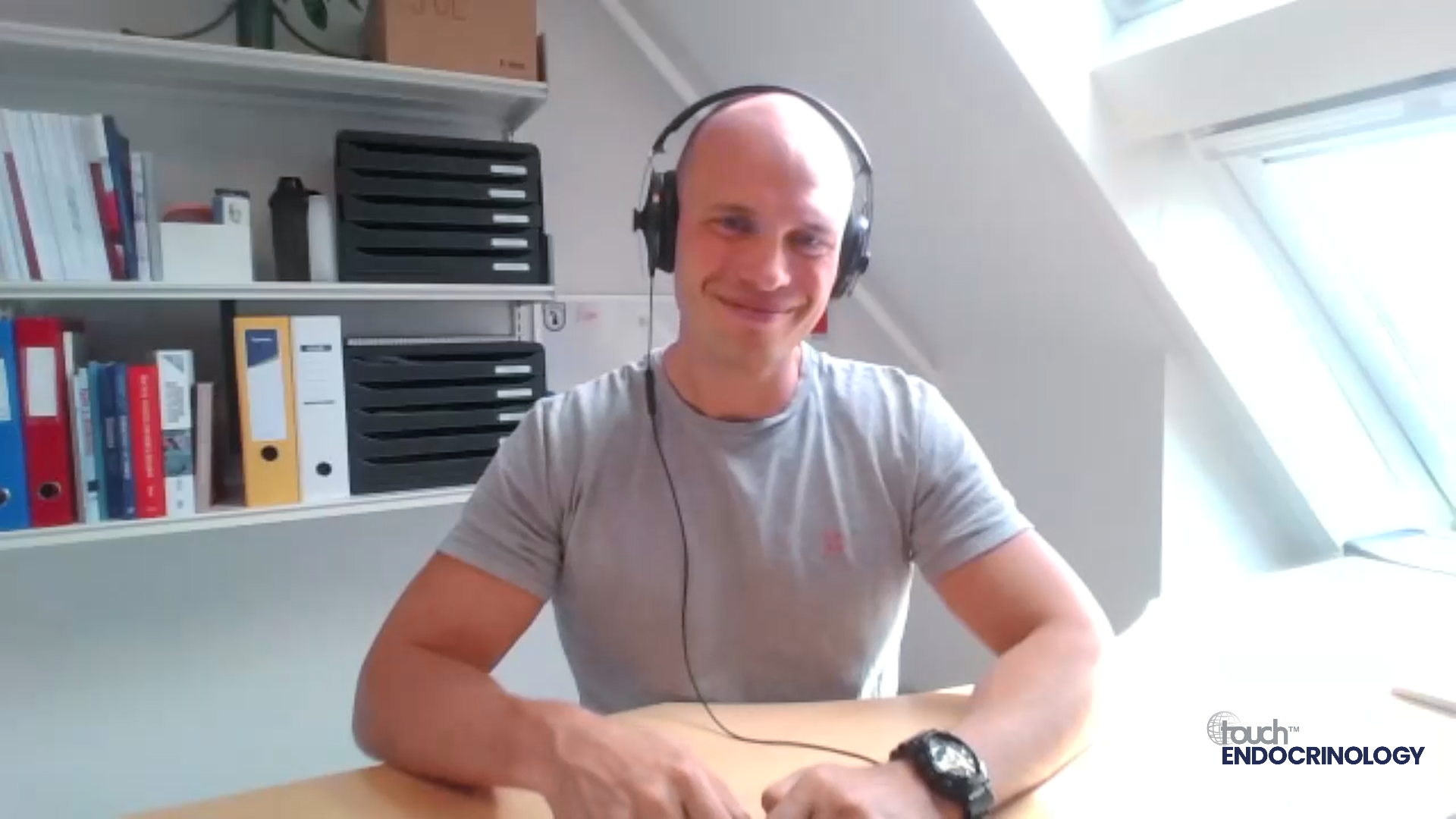
New interim data from OUTSTEP 1 reveal high levels of patient satisfaction with injectable semaglutide and underscore the importance of understanding patient experiences beyond clinical trials.

At the 33rd European Congress on Obesity (ECO) 2026, Dr Michael Vallas (Dalhousie University, Canada) presented findings from the OUTSTEP 1 study, which examines the characteristics, attitudes and experiences of individuals using injectable semaglutide for obesity management. In this interview, he provides an overview of the evolving obesity treatment landscape and the need for real-world evidence to complement clinical trial data. Dr Vallas also discusses key interim findings from the study, including patient expectations, satisfaction with treatment outcomes and attitudes towards obesity management, and explores how these insights could help clinicians deliver more comprehensive, patient-centered obesity care. touchENDOCRINOLOGY coverage of ECO 2026 The current treatment paradigm for obesity management is undergoing dramatic revision. This revision is characterized by shifting the narrative regarding weight and weight loss. Traditionally, weight management has been viewed as being the sole responsibility of the individual with obesity to achieve their goal weight by eating less and moving more, relying on willpower. This narrative, which has been adopted at a societal level (“my weight is my worth”; “success is dependent on the amount of weight I lose”; bias against those living with obesity begins on the daycare playground), dominates the narrative and has been responsible to a significant degree for propagating obesity stigma and contributing to feelings of failure, hopelessness, and internalized weight bias for individuals living with obesity. This narrative has been challenged by the accumulated scientific evidence that validates obesity as a chronic medical condition influenced primarily by neurobiological (the neurobiological resistance to weight loss), genetic, environmental/social factors in addition to behavior. With the advent of injectable semaglutide and recent incretin combination therapies, there has been renewed interest in obesity management. However, this enthusiasm has resulted in a near exclusive focus on gaining access to medication. The risk here is that at the same time that obesity has been reframed as a chronic disease, which promotes a compassionate, comprehensive, longitudinal multidisciplinary approach to management, the social narrative that one can achieve ideal weight simply through the use of medication may perpetuate ineffective use. While Phase III clinical research trials have demonstrated the efficacy and safety of injectable semaglutide we know very little about how it is used in the real world. It is for this reason that a real-world study is necessary. The OUTSTEP 1 study is designed to address this issue. The OUTSTEP1 study is a survey based, cross-sectional cohort study designed to describe the characteristics and experiences of individuals initiated on injectable semaglutide for weight management at various points in the treatment journey (within 8 weeks of initiation; between 16-24 weeks since initiation; between 48 – 56 weeks since initiation; and more than 68 weeks since initiation). Secondary objectives are to understand the treatment expectations and overall satisfaction level of individuals initiated on injectable semaglutide. In addition, the study will evaluate knowledge, attitudes and behaviors towards obesity and its management. Further, healthcare providers who prescribe injectable semaglutide for weight management will also be surveyed to assess their attitudes and behaviors towards obesity and its management. We hope to identify key factors for treatment continuation, discontinuation or reinitiation amongst individuals prescribed injectable semaglutide. The exploratory objectives of this OUTSTEP 1 study are to identify the healthcare professional use of and experience with supportive tools offered to patients prescribed injectable semaglutide and also to understand the settings in which injectable semaglutide is initiated. In the OUTSTEP 1 study we will assess citizens from Australia, Germany and Spain who are using injectables semaglutide for weight management in routine practice. We reported on a planned interim analysis of approximately 20% of the estimated 2000 patients to be recruited in the trial at the European Congress on Obesity, Istanbul Turkie, May 15, 2026. Interim data were analyzed from 389 respondents (N=226 from Germany; N=163 from Australia). Of these respondents, mean age was 48.5, 46% identified as female, mean BMI at injectable semaglutide start was 36.1, and the dominant comorbidities were Type 2 diabetes, hypertension, depression and anxiety. From these interim analyses we have learned something very important regarding expectations and satisfaction. Specifically, the treatment outcomes most expected by patients at the time of initiation of injectable semaglutide were weight loss, control of cravings, reduction of hunger as well as improved physical appearance and quality of life. What was really interesting about the satisfaction data was that the satisfaction levels with the gains made from injectable semaglutide were uniformly high (approximately 75 to 80% of the respondents were satisfied) with regard to weight loss, reduction of hunger, control of cravings, reducing thoughts of food (food noise), improved physical appearance, mobility, and better psychological health and quality of life. Overall, 78% of the respondents reported being satisfied with their overall experience. This is of critical importance as satisfaction is likely to be a predictor of maintenance of treatment. Among the most interesting findings from OUTSTEP 1 was that many participants continued to view weight management as their personal responsibility (83% endorsed this attitude) while also reporting that injectable semaglutide supported lifestyle change (79% endorsed the attitude that it is easier to maintain lifestyle changes on injectable semaglutide) and that changes to diet and exercise support the effectiveness of injectable semaglutide (88% endorsed this attitude). To me as a psychologist I find these results extremely interesting. Let me explain; the social narrative that weight is a personal responsibility is highly woven into the psychology of most people. As such, this attitude forms very early and becomes a core belief related to one’s sense of self. We know, from years of study into cognitive behavioural therapy, that underlying dysfunctional beliefs about the self are difficult to change. Further, once the unhealthy aspects of a dysfunctional belief are uncovered the belief does not disappear automatically. Cognitive reframing (from obesity management is totally my responsibility to obesity is a chronic disease and I deserve compassionate, comprehensive care) is a relevant goal for the psychological management aspects of obesity care (we view 3 pillars defining obesity management: psychological/behavioural; pharmacotherapy; bariatric surgery). So, the OUTSTEP 1 study findings suggest that people are in flux regarding their beliefs. While still endorsing the “my responsibility only” narrative we are learning that a new attitude is forming. Those in obesity management that provide behavioural and psychological care will have a strong role to play in helping people revise their attitudes toward themselves vis a vis their weight (“my weight is not my worth”; “weight is not a behaviour”; “obesity management is more about health gains than weight loss”). The clinical impact of the OUTSTEP 1 study will contribute to improving patient centered care for those living with obesity by helping providers, including primary care providers, to effectively combine medication, psychological and behavioural interventions to promote adherence and comprehensive care. Starting someone on an injectable medication is a straightforward task for primary care providers. Using the OUTSTEP 1 results primary care providers now have a framework to assess attitudes, expectations and satisfaction with outcomes. These constructs become discussion points for the providers. Identifying and discussing expectations can empower healthcare providers to guide the patient from the dysfunctional (“I am a failure for not being able to control my weight”) to the empowering (“I am working with my providers to be my healthiest and most satisfied self”). Already registered? Login below.
Could you give us a brief overview of the current treatment paradigm for obesity management with injectable semaglutide, and why real-world evidence on patient experiences is needed alongside clinical trial data?
What were the aims, design, and key characteristics of the OUTSTEP 1 study, and what insights were you hoping to gain by evaluating expectations, satisfaction, attitudes, and behaviors across different treatment milestones?
What have been the most important findings from this interim analysis regarding patient expectations and satisfaction, and were there any observations that surprised you?
How should clinicians interpret this relationship between pharmacological treatment, patient agency, and behavioral modification?
What will be the likely clinical impact of these findings, particularly given the high level of primary care involvement, and how might they inform more patient-centred obesity management pathways?
This content has been developed independently by Touch Medical Media for touchENDOCRINOLOGY. It is not affiliated with the European Association for the Study of Obesity (EASO). Views expressed are the speaker’s own and do not necessarily reflect the views of Touch Medical Media.
Disclosures: Michael Vallas is a consultant for Abbott, Abbvie, Bausch Health, Boehringher Ingelheim, Novo Nordisk, Sanofi; has received grant/research support from Abbott, Bausch Health; on Advisory Board for Abbott, Abbvie, Bausch Health, Boehringher Ingelheim, Novo Nordisk, Sanofi; received Honoraria/Honorarium from Abbott, Abbvie, Bausch Health, Boehringher Ingelheim, Novo Nordisk, Sanofi; Speaker’s Bureau participant with Abbott, Abbvie, Bausch Health, Boehringher Ingelheim, Novo Nordisk, Sanofi.
Cite: Michael Vallas. OUTSTEP 1 interim analysis: Patient experiences with injectable semaglutide for obesity management. touchENDOCRINOLOGY. June 2026.
Editor: Carla Junkier, Editorial Director.