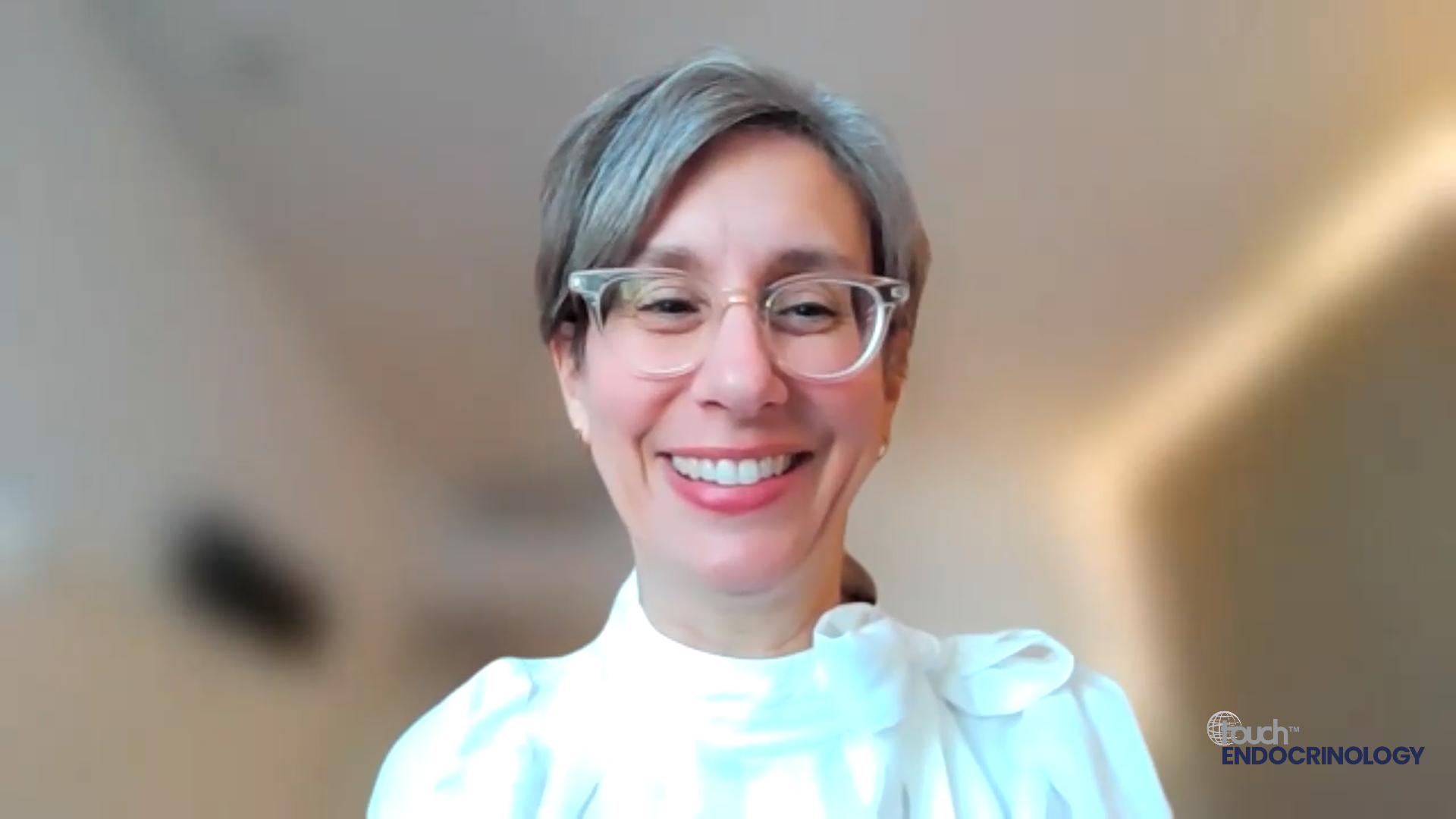
Dr Eric Ravussin highlights new REDEFINE 1 data showing improved physical function and preserved functional strength despite substantial weight loss with CagriSema.
At the 33rd European Congress on Obesity (ECO) 2026, Dr Eric Ravussin (Pennington Biomedical Research Center, Baton Rouge, Louisiana, USA) discussed findings from a REDEFINE 1 analysis examining the effects of CagriSema on body composition, muscle strength and physical function in adults with overweight or obesity. Amid ongoing concerns regarding the loss of fat-free mass during pharmacologically induced weight reduction, the analysis explored whether substantial weight loss was associated with changes in functional outcomes. In this interview, Dr Ravussin reviews the rationale for the study, key findings and their implications for monitoring and supporting patients receiving obesity pharmacotherapy.
touchENDOCRINOLOGY coverage of ECO 2026
Could you give us a brief overview of the current understanding of the relationship between weight loss, changes in body composition, and concerns around muscle preservation and physical function in obesity management?
There is a big concern about muscle loss with GLP-1 agonists. People are really worried about causing what we would call sarcopenic obesity. This means becoming frail because you do not have enough muscle to carry out everyday activities and maintain physical function.
However, these concerns are largely based not on direct measurements of skeletal muscle, but on measurements of body composition using what we call DEXA. A DEXA scan measures bone mineral content, fat mass and fat-free mass. Fat-free mass accounts for about 75% of total body weight in a lean individual, whereas in someone with severe obesity it may account for closer to 50%.
When weight loss is achieved through lifestyle intervention; eat less, move more, the composition of the weight loss is typically about three-quarters fat mass and one-quarter fat-free mass. With the much larger weight losses seen with GLP-1 therapies, often 20–30%, approximately 25–40% of the weight loss is classified as fat-free mass.
People have tended to extrapolate this and assume that fat-free mass is muscle, but that is not necessarily the case. Muscle cannot be measured directly by DEXA. To accurately measure skeletal muscle, you need methods such as magnetic resonance imaging (MRI). Another approach is the D3-creatine dilution method, which measures total body muscle mass. However, very few pharma-sponsored studies have included these more precise measurements of skeletal muscle.
What were the aims, design, and methodology of this REDEFINE 1 analysis, and why was it important to assess body composition, muscle strength, and physical function alongside weight reduction?
What I presented in Istanbul, Turkey, was an analysis of a subset of the 3,400 participants enrolled in REDEFINE 1, a Phase 3 clinical trial evaluating weight loss with CagriSema, a combination of a GLP-1 receptor agonist and an amylin agonist.
Among these 3,400 participants, 252 underwent DEXA assessments of body composition. A much larger group, around 1,000 participants, had assessments of physical function using two questionnaire-based measures. There was also a subgroup that completed the sit-to-stand test, where participants repeatedly move from a seated to a standing position for 30 seconds. The more repetitions they can perform, the better their functional strength for carrying out everyday activities.
The major finding was that, in the 252 participants who underwent DEXA assessments, there was an improvement in physical function despite a substantial loss of fat-free mass. I want to emphasize that I am referring to fat-free mass, not muscle mass. Physical function, as measured by the two questionnaires, improved, meaning that participants felt better able to perform their daily activities.
We also found no decline in performance on the sit-to-stand test. In other words, even if participants may have had less muscle mass, which was not directly measured in this study, there was no detrimental effect on functional strength. One reason may be that they were effectively lifting less weight. When you lose 25% of your body weight, it is like taking off a backpack that weighs 25% of your initial weight.
So, the key findings were improved physical function and no evidence of a loss of muscle strength despite the substantial weight reduction achieved with CagriSema.
What were the key findings in terms of changes in fat mass, lean soft tissue, and muscle strength, and how should clinicians interpret these results in the context of concerns around sarcopenia during substantial weight loss?
Your analysis explored associations between body composition and patient-reported physical function. What is known about the clinical utility of measures such as fat-to-lean soft tissue ratio in understanding treatment outcomes beyond body weight alone?
As I mentioned earlier, what we observed was an increase in the proportion of lean soft tissue relative to total body weight. Lean soft tissue is essentially fat-free mass minus bone mass.
What this means is that, although participants lost both fat mass and fat-free mass, the proportion of lean soft tissue relative to their total body weight actually increased. In other words, for a given body weight, they had more lean tissue available to support everyday activities.
This is an important observation because participants lost substantially more fat mass than fat-free mass. As a result, body composition improved, even though some fat-free mass was lost. Looking at measures such as the fat-to-lean soft tissue ratio therefore provides additional insight beyond body weight alone, as it helps us understand how the composition of the weight loss may influence physical function and overall treatment outcomes.
What will be the likely clinical impact of these findings, and how might they influence approaches to monitoring and supporting patients receiving obesity pharmacotherapy to optimize long-term physical function?
I think these findings are reassuring for most people receiving obesity pharmacotherapy. The 3,400 participants in REDEFINE 1 were enrolled in a Phase 3 clinical trial conducted by Novo Nordisk and, although they ranged in age from 18 to 70 years, they were generally relatively healthy individuals.
However, the situation may be different in people who already have sarcopenia or a pre-existing loss of skeletal muscle. If additional muscle loss occurs in these individuals, it could contribute to what we call sarcopenic obesity, leading to frailty. In older adults, particularly, this may increase the risk of falls, which can have serious consequences.
This is the population that requires the closest monitoring. In older individuals, particularly those over the age of 60, it is important to minimize the loss of fat-free mass and potentially skeletal muscle during weight reduction. One approach is to incorporate more exercise, especially resistance training. This does not necessarily require going to a gym; there are many forms of resistance exercise that use body weight and can be performed at home.
Another important strategy is increasing the protein content of the diet. Together, resistance training and adequate protein intake are two approaches that can help counteract some of the loss of fat-free mass and potentially preserve skeletal muscle during treatment.
So, while these findings support the overall benefits of obesity pharmacotherapy in generally healthy individuals, they also highlight the importance of paying particular attention to older adults and other at-risk populations to help optimize long-term physical function.
This content has been developed independently by Touch Medical Media for touchENDOCRINOLOGY. It is not affiliated with the European Association for the Study of Obesity (EASO). Views expressed are the speaker’s own and do not necessarily reflect the views of Touch Medical Media.
Cite: Eric Ravussin. Beyond weight loss: Insights from REDEFINE 1 on physical function and body composition. touchENDOCRINOLOGY. June 17 2026.
Editor: Carla Junkier, Editorial Director.