Emerging evidence highlights the potential of CGM to identify dysglycemia earlier, predict diabetes progression and guide personalized care.


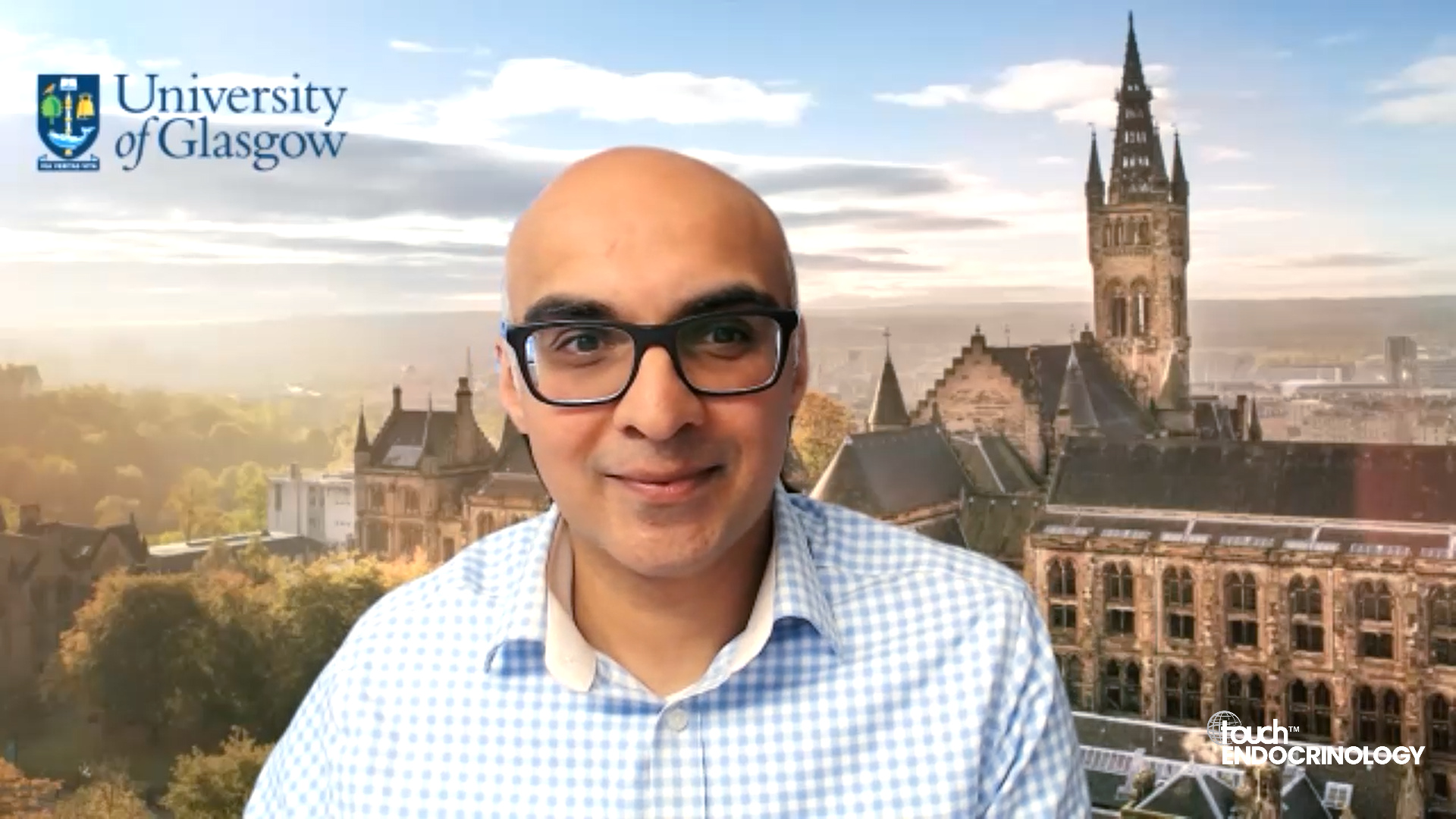
Continuous glucose monitoring (CGM) is increasingly used in diabetes management, with growing interest in its potential to support earlier diagnosis, identify individuals at risk of disease progression, and inform more personalized care. At the EASD 2026 Annual Meeting, we spoke with Dr Viral Shah (Indiana University School of Medicine, Indianapolis, IN, USA) about the potential role of CGM in diabetes diagnosis and prevention, the metrics that could help identify dysglycemia earlier, and the evidence needed to support its broader clinical application. In this interview, Dr Shah also discusses how CGM could guide treatment decisions and how artificial intelligence may help advance personalized risk prediction.
Don’t miss out on hearing about our latest peer-reviewed articles, expert opinions, conference news, podcasts and more.
How could CGM change the way we think about diabetes diagnosis and risk?
Currently, we diagnose diabetes using traditional glucose measures, such as fasting plasma glucose, an oral glucose tolerance test (OGTT), where glucose is administered and blood samples are taken after one or two hours, or HbA1c. None of these measures is perfect.
With the increasing use of continuous glucose monitoring (CGM) in people with type 1 and type 2 diabetes, and now its availability over the counter for people without diabetes, I do think there is a role for CGM in diagnosis.
There is still a lot of work to be done, and we are not there yet. However, I think there is considerable potential for CGM data to be used to help diagnose early-stage type 2 diabetes, as well as established type 2 diabetes.
What CGM measures could help identify people at risk of diabetes progression earlier?
I think there could be a lot of different metrics. The key point is that traditional glucose measures, whether venous glucose or an oral glucose tolerance test (OGTT), provide a snapshot at a single point in time, whereas CGM measures glucose every 1–5 minutes, 24/7, for as long as you wear it, typically around 10–14 days. So, it provides a lot more information.
Which of these metrics could help us diagnose early-stage type 2 diabetes? I think that is still a matter of debate within the scientific community, but there are a few contenders. One is the time spent above 140 mg/dL. If you spend around 10% of your time above that threshold, that suggests your glucose levels are not normal and that you may be entering a dysglycemic range. I think that could be one potential marker.
We are also in the age of AI, where we can take all this granular information and potentially develop a score or model that provides a very individualized prediction, not just of progression to type 2 diabetes, but also of cardiovascular and microvascular risk.
Again, I think this will take time. Scientific research tends to move a little more slowly than technology companies, which are keen to apply AI and machine learning. But I think there is tremendous potential to use all this information that is already available to advance personalized medicine.
How could CGM support earlier treatment decisions and more personalized monitoring?
I think that’s a great question, following on from the previous two questions about diagnosis. Although many people would argue that CGM is not currently recommended for diagnostic purposes, and rightly so, once you diagnose someone, the next question is: what are you going to do? How are you going to manage that individual and their dysglycemia?
I think it is really difficult to understand what is going on without CGM. How can I support you on your journey with lifestyle modifications, exercise, choosing the right diet, or selecting the right medication? CGM can help with all of that.
I think we now have enough evidence to support an important role for CGM in managing both early-stage type 2 diabetes and established type 2 diabetes. The CONNECT trial, for example, tells us that people with type 2 diabetes who are not on insulin therapy can benefit significantly from using CGM.
So, when it comes to guiding treatment, I think we have enough evidence to suggest that CGM has a really important role to play, including in early-stage type 2 diabetes.
What evidence is still needed before CGM can play a broader role in diabetes diagnosis and prevention?
We need a lot of trials, really, because we are talking about two different areas: diagnosis and prevention.
For diagnosis, I am sure future studies will emerge, but this will require collaboration with regulatory agencies to ensure that the clinical trial designs align with regulatory requirements so that CGM can be approved for diagnostic purposes. I am not sure exactly what that process will look like at this point, but I am sure there is a lot happening in this space.
For prevention, we will probably need more longitudinal studies to understand how CGM can help identify people at risk and potentially prevent progression to diabetes. That will take some time, but I am optimistic that in the near future, we will have more data to help answer these questions.
Cite: Viral Shah. Rethinking diabetes diagnosis: The potential of CGM for earlier detection and personalized care. touchENDOCRINOLOGY. October 2026.
Disclosure: No funding was received in the publication of this content. Thank you to Dr Viral Shah for sharing her expert insights. Dr Viral Shah has received consultancy fees from Lilly, Roche, T1D Scout and MiniMed; grant and research support from Dexcom, Abbott, Insulet, MiniMed, Breakthrough T1D, the NIH, Enable Bioscience, Zucara Therapeutics, Lilly and Novo Nordisk; and has served on advisory boards for Dexcom, Insulet, Tandem Diabetes Care, MiniMed, Novo Nordisk, Roche, Sanofi and Sequle Med Tech.
Interviewer: Caroline Markham
Editor: Carla Junkier
touchENDOCRINOLOGY coverage of EASD Congress 2026: This content has been developed independently by Touch Medical Media for touchENDOCRINOLOGY. It is not affiliated with EASD. Views expressed are the speaker’s own and do not necessarily reflect the views of Touch Medical Media.