We are delighted to announce Dr Mindy Lee as a touchENDOCRINOLOGY Future Leader 2026, recognized by her peers as an emerging leader in pediatric endocrinology.
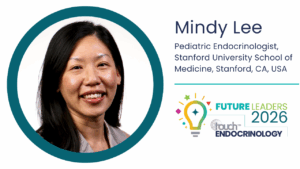
As part of the touchENDOCRINOLOGY Future Leaders 2026 series, we are pleased to feature Dr Mindy Lee, a physician-scientist and pediatric endocrinologist at Stanford University whose work sits at the intersection of diabetes care, technology and health systems innovation. An NIH-funded DiabDocs K12 scholar, Dr Lee is dedicated to improving outcomes for people with diabetes through the thoughtful implementation of emerging technologies and novel models of care.
Dr Lee has played a leading role in advancing the use of continuous glucose monitoring (CGM) in the inpatient setting, spearheading the implementation and evaluation of CGM policies across Stanford’s adult and pediatric hospitals. This work helped inform the American Diabetes Association’s 2024 revision of its inpatient diabetes management guidelines. Her current research focuses on expanding access to diabetes technologies, remote patient monitoring and support programmes that can improve glycemic outcomes for young people living with type 1 diabetes.
In this interview, Dr Lee reflects on the mentorship that has shaped her career, discusses the importance of patient-centered and family-centered approaches to diabetes care, and shares her advice for trainees considering a career in pediatric endocrinology. Throughout, she highlights the value of listening to patients, identifying unmet clinical needs and developing innovative, equitable solutions that reduce the burden of living with diabetes.
New insights are added regularly, covering a broad range of subspecialties and evolving clinical scenarios. Sign up below for Free Access to the latest clinical updates in your specialty!
Can you tell us about a mentor who has significantly impacted your career?
David Maahs has been a deeply influential mentor over the past eight years that I have been at Stanford. I first met him during my interview for the Stanford Pediatric Residency Program’s physician-scientist track. He got me excited about all the innovative work on diabetes technology at Stanford, including the 4T Program to start continuous glucose monitor (CGM) for youth with new onset type 1 diabetes and providing support through remote patient monitoring. Beyond the science, what struck me was his genuine advocacy for physician-scientist trainees. He has sponsored me to write commentaries, present at several conferences, and connected me with collaborators who have shaped my path. Through the harder stretches, he stays optimistic and encouraging. Having a mentor who believes in me even when I don’t believe in myself has been essential to keeping me going in science.
What role do patients play in shaping how you approach treatments and make clinical decisions?
My clinical practice is grounded in evidence-based, family-centered care. That means drawing on practice guidelines and the latest scientific literature to inform what I do, while also listening with intention to families and soliciting their preferences and any barriers to the treatment options in front of them. Mealtime insulin dosing is a good example of tailoring a plan to a patient’s context. Based on clinical practice guidelines, I always recommend automated insulin delivery (AID) with carbohydrate announcement for meals as first-line therapy. But for patients who are not able to do that, I might recommend a simplified meal announcement strategy — asking them to announce a typical amount of carbohydrates they eat. I’ve found this increases how often they announce meals, and today’s AID algorithms are sophisticated enough to keep their glucoses in range.
The personal connections I’ve made with patients and families in clinic have shaped my career trajectory. They taught me that the hardest part of managing diabetes isn’t knowing the clinical targets or what to do — it’s the mental and logistical burden of thinking through and managing a complex series of tasks 24/7. I’ve also seen how advanced technologies like AID systems can ease that burden, yet remain unreliably accessible to many who need them. Those lessons ultimately drove me to pursue clinical research aimed at designing new care models that make technology use more equitable, scalable, and sustainable.
What advice would you give to medical students or young professionals considering a career in pediatric endocrinology?
During residency, one of my mentors advised me to keep a notebook on clinical service and write down all the problems, gaps, and frustrating things I encountered clinically. These become the best research ideas and quality improvement projects. I still follow this advice, and it’s the first thing I’d pass on to trainees. The unmet needs you see in clinic — the burdens your patients carry, the workflows that don’t work — are the seeds of meaningful work.
I’d also encourage students to think honestly about what energizes them and what they want their work-life balance to look like. Many people are drawn to pediatric endocrinology for the intellectual elegance of its hormonal feedback loops, and that curiosity matters — but it’s worth knowing that the field doesn’t pay as well as some other subspecialties, while generally offering a very favorable work-life balance. Whatever kind of medical career you pursue I’d encourage building hobbies and human connections outside of medicine. Medicine is a demanding profession, and those outside anchors are what protect you from burnout over the long run.
More content in pediatric endocrinology.
Cite: Bridging technology and patient care with Dr Mindy Lee: touchENDOCRINOLOGY Future Leader 2026. touchENDOCRINOLOGY. September 2026.
Disclosures: This short article was prepared by touchENDOCRINOLOGY in collaboration with Dr Lee. No fees or funding were associated with its publication.
Editor: Carla Junkier, Editorial Director.