
 Metabolic dysfunction-associated steatohepatitis (MASH) represents the progressive, fibroinflammatory form of metabolic dysfunction-associated steatotic liver disease (MASLD).1 Obesity, type 2 diabetes, dyslipidemia, and metabolic syndrome are recognized as risk factors for the development of MASH.2 Without timely detection and management, MASH can advance to cirrhosis, hepatocellular carcinoma, and liver-related mortality. Early recognition in routine clinical care is therefore critical to improving outcomes.
In this Q&A, Dr Paul Brennan (University of Dundee, UK) discusses the clinical indicators that should prompt healthcare professionals to screen for MASH in at-risk individuals, highlighting strategies to optimize early diagnosis. His insights underscore the importance of systematic risk assessment, non-invasive tools, and multidisciplinary coordination to improve patient identification and management.
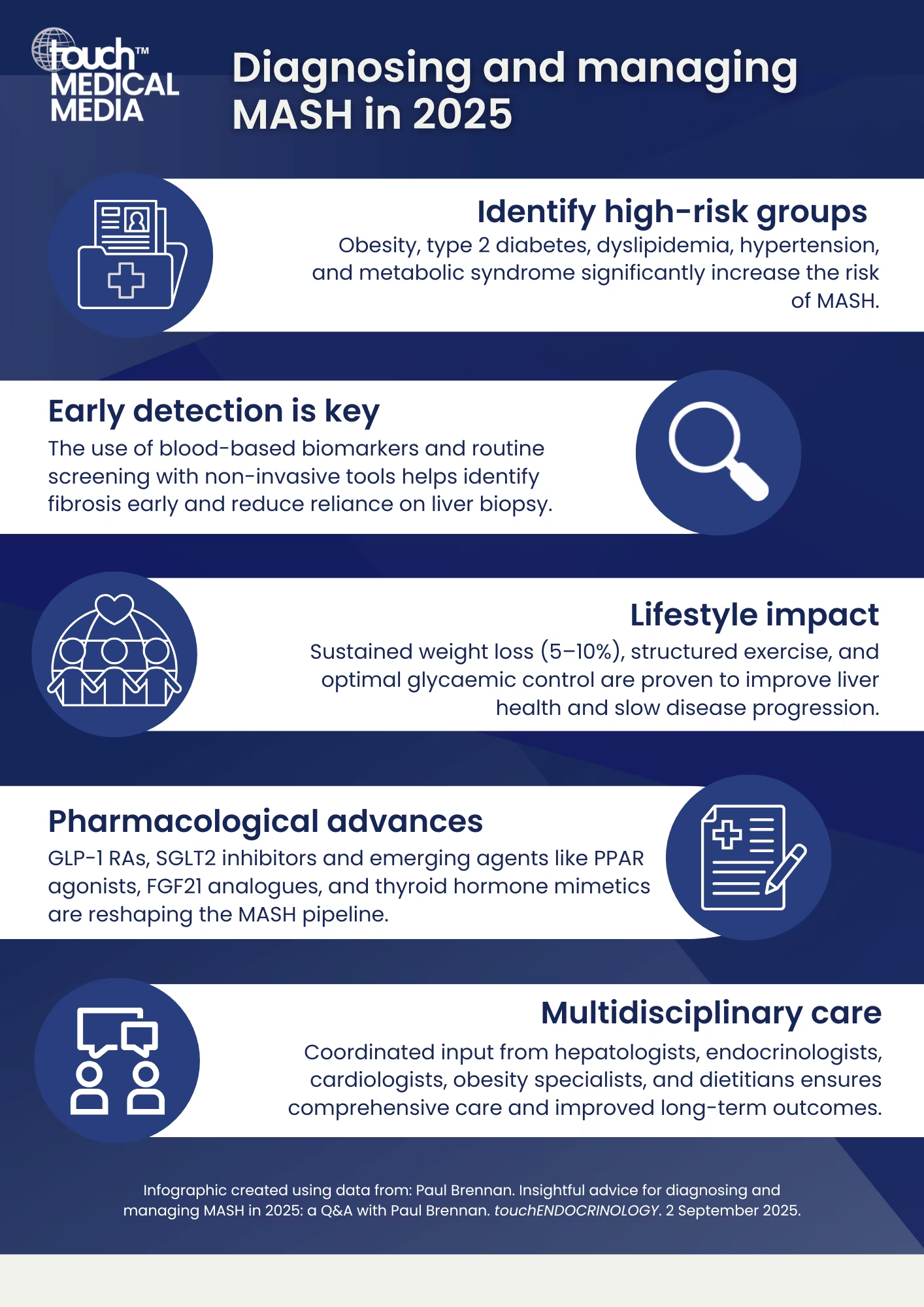
Healthcare professionals are advised to consider screening individuals at risk of having MASLD with fibrosis or the fibroinflammatory variant, MASH, if they are presenting with established metabolic risk factors. The following comorbidities or phenotypic characteristics should prompt consideration for MASLD or MASH:1
- Obesity: Central or visceral adiposity, as demonstrated by increased waist circumference, represents a significant risk factor for MASH.
- Type 2 diabetes mellitus (T2DM): Individuals diagnosed with T2DM are at substantially heightened risk for both the development and progression of MASH to more advanced liver disease.
- Dyslipidemia: Elevated triglyceride concentrations, reduced high-density lipoprotein (HDL) cholesterol, or increased low-density lipoprotein (LDL-c) levels may be indicative of increased risk and often confer significant cardiovascular risk.
- Hypertension: The coexistence of high blood pressure with other metabolic risk factors further increases the likelihood of hepatic involvement.
- Elevated liver enzymes: Unexplained elevations in alanine aminotransferase (ALT) and aspartate aminotransferase (AST) should prompt additional liver evaluation.
- Metabolic syndrome (MetS): The presence of three or more of the following merits consideration for MASH screening: abdominal obesity, elevated fasting glucose, hypertriglyceridemia, low HDL cholesterol, or hypertension.
- Family history: A family history of steatotic liver disease or cardiometabolic disorders may confer increased risk. There are a number of predisposing genetic variants, but these are not routinely evaluated.
- Other factors: Note high risk concordant pathologies, including polycystic ovary syndrome (PCOS) and obstructive sleep apnea (OSA), and certain ethnic backgrounds, notably hispanic and South Asian populations, are also associated with higher prevalence of MASLD and MASH.
Optimizing early diagnosis in clinical practice
To promote early identification of MASH within routine clinical care, the following strategies can be considered:1
- Systematic risk assessment of at-risk individuals: Integrate evaluation of metabolic risk factors into annual health assessments, particularly for adults with obesity, diabetes, or features of metabolic syndrome as per the most recent EASL-EASD-EASO MASLD guidelines.1
- Utilization of non-invasive tools: Implementing automated or reflexive testing into pathways of care, utilizing guideline endorsed non-invasive tests (NITs).
- Patient education: Provide patients across the lifespan (including at-risk patients with recognized co-morbidities, who remain undiagnosed) with information concerning the risks associated with steatotic liver disease, and encourage evidence-based lifestyle modifications to facilitate earlier presentation and intervention.
- Multidisciplinary coordination: Enhance communication among primary care providers (PCPs), endocrinologists and diabetologists, obesity medicine specialists, integrated weight management services, cardiologists, and gastroenterologists and hepatologists to ensure timely evaluation and comprehensive management.
- Electronic health record (EHR) utilization: Leverage EHR systems to identify high-risk individuals and prompt clinicians to consider targeted assessments of hepatic and holistic metabolic health.
Early recognition and intervention are critical, as they hold the potential to alter the course of MASH, mitigate the risk of advanced fibrosis and cirrhosis, and reduce associated cardiovascular complications. By maintaining a high index of suspicion for these clinical indicators and systematically integrating screening protocols, healthcare professionals can significantly improve patient outcomes in routine practice.
In recent years, the approach to diagnosing MASLD and MASH has seen a paradigm evolution, emphasizing non-invasive methodologies and reducing dependence on histology. Notable developments include advanced serum biomarkers, some of which are proprietary and often require adoption of sequential methods to refine accuracy. The advent of innovative imaging modalities, including liver elastography, has also revolutionized approaches to estimating fibrosis, which can often also be incorporated into composite scoring systems – all contributing to improved diagnostic accuracy.
Emerging serum biomarkers
Progress in blood-based biomarkers is enhancing diagnostic precision. The degree of fibrosis seen in liver tissue is the strongest predictor of survival and liver complications in patients with steatotic liver disease. Therefore, the main purpose of blood-based biomarkers is to estimate the likely fibrosis stage. Beyond their diagnostic utility, clinicians are increasingly interested in how biomarkers can predict outcomes, whether as standalone predictors in the short term or as indicators of longitudinal outcomes over time.
Routinely endorsed biomarkers are:1
- The FIB-4 index incorporates age, ALT, AST, and platelet count. A score <1.3 excludes advanced fibrosis in patients under the age of 65, this score rises to <2.0 in patients 65 or over. Sequential measurements of FIB-4 may predict outcomes, including for cardiovascular disease (CVD), over a 10-year horizon.
- The Enhanced Liver Fibrosis (ELF) score combines serum markers hyaluronic acid, procollagen III amino terminal peptide (PIIINP), and tissue inhibitor of metalloproteinases-1 (TIMP-1). Standard cut offs include a score of >9.8 to “rule-in” advanced fibrosis. ELF may also have some prognostic utility in those at risk of decompensation, and in those with an ELF score >13 there is a significant risk of mortality in the following 6 months.
- Multi-analyte algorithms, such as the LiverRisk score, NIS2+™, and NIS4®, assimilate several markers to stratify risk and identify patients at risk of LREs.
Advanced imaging modalities
Innovative non-invasive imaging tools are redefining liver health assessment in MASLD and MASH, these can vary depending on local access:1
- Transient elastography (TE) (FibroScan™): Assesses for liver stiffness measurement (LSM; kPa), as a surrogate of fibrosis, and controlled attenuation parameter (CAP) to quantify hepatic fibrosis and steatosis, respectively. An LSM <8.0 kPa excludes advanced chronic liver disease (ACLD), >12 kPa begins to “rule-in” ACLD, but with variable positive predictive values. Other clinical variables can be incorporated with the LSM value to provide improved diagnostic accuracy including FAST2, AGILE3+ and AGILE4.
- 2D-shear wave elastography (2D-SWE): Often adopted on standard B-mode ultrasound and allows for the selection of a region of interest (RoI), overcoming some limitations associated with TE. Uses a “rule of 4” to exclude the presence of ACLD (<9 kPa) or to begin to “rule-in” ACLD (>13kPa).
- Magnetic resonance imaging–proton density fat fraction (MRI-PDFF): Delivers precise quantification of hepatic fat content, proving particularly valuable in both clinical research and high-risk populations. Reductions of >30% in PDFF are suggestive of resolution of MASH in clinical trials.
- Magnetic resonance elastography (MRE): Offers enhanced sensitivity and specificity for staging fibrosis and at 5 kPa is predictive of LREs. It is increasingly adopted in specialized clinical centres.
Impact on patient outcomes
These advancements are streamlining diagnostic fibrosis protocols for MASLD and MASH, with notable implications:
- Facilitating earlier identification of individuals at risk, thus enabling prompt intervention;
- Enhancing patient experience by minimizing invasive procedures, e.g., liver biopsy;
- Supporting testing for those at highest risk of advanced fibrosis, especially enriched populations with metabolic syndrome (MetS); and
- Promoting personalized risk stratification to inform surveillance, therapeutic decisions (with advent of novel liver-targeted therapies), and specialist referral for those with ACLD.
Collectively, these non-invasive diagnostic tools and biomarkers are fundamentally transforming clinical practice. They foster a shift towards proactive, patient-centric management of MASLD and MASH aimed at accurate diagnosis, whilst some also infer significant prognostic potential.
The optimal management of MASH in individuals with concurrent T2DM or obesity requires an integrated strategy, combining evidence-based lifestyle interventions, pharmacological therapy, and multidisciplinary team engagement. Importantly, T2D is one of the most avid proponents of fibrogenesis, and those with T2D should be offered fibrosis assessment.3 There are a number of desirable properties which drugs routinely used in T2D offer for those with MASLD and MASH in terms of reducing CVD risk. The latest development is the FDA approval of semaglutide as a treatment for non-cirrhotic, fibrotic MASH.
Lifestyle modifications
- Weight reduction: Robust clinical evidence supports sustained weight loss of 5–10% as an effective measure for ameliorating hepatic steatosis and inflammation, and a weight loss of >10% is associated with improving fibrosis.1 Comprehensive interventions include individually tailored nutritional counselling, such as adoption of the Mediterranean, or hypocaloric diets, coupled with structured physical activity regimens.
- Physical activity: Both aerobic and resistance exercise have been shown to decrease hepatic fat content independently of weight loss. Current recommendations support engagement in moderate-intensity physical activity for at least 150–200 minutes per week to achieve and sustain hepatic and metabolic benefits as per the WHO.4
- Optimization of glycaemic control: Maintaining optimal glycaemic control in T2DM is critical, as hyperglycaemia and insulin resistance are key drivers of MASH progression. Adjustments in antihyperglycaemic regimens, including consideration of agents with hepatic benefit, should be prioritized.5
Pharmacological therapy5
- Antidiabetic agents: Glucagon-like peptide-1 receptor agonists (GLP-1 RAs) (e.g., semaglutide and liraglutide) and sodium-glucose cotransporter-2 (SGLT2) inhibitors have demonstrated efficacy in reducing hepatic steatosis and inflammation, with ancillary benefits for weight reduction and glycaemic control. These agents should be considered in patients with T2DM and MASH, based on individual patient characteristics and comorbidities, particularly for those with heart failure, coronary artery disease, chronic kidney disease or microvascular complications from T2DM.
- GLP-1 RAs + glucose-dependent insulinotropic polypeptide/glucagon (GIP/GcG; including triagonists): Novel augmented preparations, including tirzepatide, have demonstrated significant improvements in MASH resolution. In the Synergy-NASH phase II trial, tirzepatide (5 mg and 15 mg) demonstrated improvements in fibrosis noted in the F3 fibrosis subgroup.6 Other combinational drugs include retatrutide, pemvidutide and survovutide.
- Thiazolidinediones: Pioglitazone is associated with histological improvements in steatohepatitis and may contribute to fibrosis regression in patients with biopsy-proven MASH and T2DM. Risk-benefit assessment is essential given potential adverse effects (congestive cardiac failure, fluid retention), and it has not been endorsed by the most recent EASL–EASD–EASO guidelines.1 There are newer pan-peroxisome proliferator-activated receptor (PPAR) agonists, such as lanifibranor, in clinical trials (NATiV3).7
The role of multidisciplinary care
A multidisciplinary, patient-centred approach is fundamental for the effective management of MASH, particularly in individuals with metabolic comorbidities:
- Interdisciplinary collaboration: Coordination among hepatologists, endocrinologists, diabetologists, cardiologists, obesity medicine specialists, registered dietitians, specialist nurses, and behavioural health professionals is integral to ensuring comprehensive evaluation and individualized therapeutic strategies, addressing the multifaceted nature of MASH and its underlying risk factors. There needs to be a keen awareness of the patient’s social determinants, which vary enormously depending on sphere of practice and how public health approaches in particular are required to modify some of these aspects of the disease.
- Patient education and support: Engagement in structured education programmes and access to psychological or behavioural support services are crucial for facilitating sustained lifestyle modification, medication adherence, and overall health-related quality of life.
- Disease monitoring: Longitudinal surveillance utilizing non-invasive tools in conjunction with metabolic risk factor assessment enables timely therapeutic modifications and early detection of disease progression. This can be particularly useful when trying to determine response to specific liver-directed therapies. This remains a challenging area, whereby most biomarkers were not developed to extrapolate these challenging paradigms in the natural history of the disease process, but more real-world evidence (RWE) will hopefully offer additional insights.
In summary, the integration of evidence-based medical, nutritional, and behavioural interventions within a multidisciplinary framework is paramount to improving clinical outcomes and mitigating long-term complications in patients with MASH and co-existing T2DM or obesity.
Agents modulating metabolic pathways
- GLP-1 RAs, including semaglutide and liraglutide, exert pleiotropic effects by enhancing glucose-dependent insulin secretion, delaying gastric emptying, and inducing satiety, leading to weight reduction and improved glycaemic control. Recent studies have demonstrated that semaglutide significantly increases the resolution rates of steatohepatitis without aggravating fibrosis, establishing its efficacy as a disease-modifying agent in MASH, particularly in patients with T2DM and obesity.8 Semaglutide 2.4 mg has just received FDA fast-track approval for the treatment of F2-F3 MASH.
- SGLT2 inhibitors, primarily used for glycaemic control and heart failure with reduced ejection fraction (HFrEF) management, have been observed in preliminary studies to attenuate hepatic steatosis and reduce inflammatory markers. Several ongoing randomized controlled trials are evaluating the histological and clinical benefits of SGLT2 inhibitors in MASH cohorts, with a particular focus on fibrosis regression and cardiometabolic protection, often as part of combinational regimes.9 A recent paper on dapagliflozin demonstrated positive results of MASH resolution with no worsening of fibrosis in a Chinese cohort.10
- PPAR agonists, such as lanifibranor, target multiple isoforms (α, δ and γ) implicated in lipid metabolism, insulin sensitivity and fibrogenesis. Early-phase data reveal histological improvement in steatosis, inflammation and fibrosis, positioning these agents as promising candidates for attenuating disease progression in MASH.11,12
- Dual and triple incretin receptor agonists, including tirzepatide (GIP/GLP-1), exploit synergistic mechanisms to optimize metabolic outcomes, induce substantial weight loss, and reduce hepatic fat accumulation. Initial results from clinical trials indicate promising efficacy in both metabolic and hepatic endpoints, and ongoing studies are evaluating regulatory endpoints, as suggested earlier.6
Anti-inflammatory and antifibrotic compounds
Fibroblast growth factor 21 (FGF21) agonists: Efruxifermin is a bivalent FGF21 analogue in development for the treatment of MASH. Of the 181 participants enrolled in the phase II trial, 88 had week 96 biopsies; remarkably, of these ≥1-stage fibrosis improvement without MASH worsening was observed in 24% of the placebo group, 46% of the 28-mg group, and 75% of the 50-mg group, representing a huge development in the field with significant apparent efficacy.
Thyroid hormone receptor-β (THR-β): Thyroid hormone mimetics directly bind to THR-β, which has a number of liver-specific effects which ameliorate the pathophysiological processes involved in MASH. THR-β mimetics activate the THR-β receptor in the nucleus, promoting transcription of genes involved in lipid metabolism.13 This leads to enhanced β-oxidation of fatty acids, increased mitochondrial biogenesis, and mitophagy. Resmetirom became the first licenced pharmacotherapeutic for the treatment of MASLD and MASH with significant or advanced fibrosis on the basis of the seminal MAESTRO NASH trial.14 This included a number of adaptive trial designs, including the collating of all NIT data, a safety cohort and open label extension element, MAESTRO-NAFLD and MAESTRO-OLE, respectively.
Clinical trials and regulatory considerations
The MASH therapeutic pipeline is continually expanding, with numerous agents in advanced-phase clinical trials and is also rapidly evolving as our increased understanding of the pathophysiological proponents of the disease are better defined. The adoption of validated non-invasive endpoints (e.g., MRI-PDFF, elastography, serological biomarkers) will likely further expedite drug development and patient stratification.
Implications for clinical practice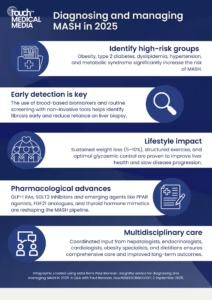
The trajectory of MASH management is shifting towards precision medicine, integrating genetic, metabolic, and behavioural phenotyping to individualize therapy. Combination regimens targeting distinct pathogenic pathways may become the clinical standard, maximizing efficacy and minimizing adverse effects.
Advances in non-invasive disease monitoring will supplant liver biopsy, enabling early intervention and minimizing procedural risks; with the exception of clinical trials which may continue to be at least partly reliant on histology. Patient-centred education, behavioural support, and shared decision-making, supported by technology and enhanced automated approaches, will further optimize long-term outcomes.
References
- European Association for the Study of the Liver (EASL), European Association for the Study of Diabetes (EASD), European Association for the Study of Obesity (EASO). EASL–EASD–EASO Clinical Practice Guidelines on the management of metabolic dysfunction-associated steatotic liver disease (MASLD). Journal of Hepatology. 2024;81:492–542.
- Novo Nordisk. Metabolic dysfunction-associated steatohepatitis (MASH). Available at: www.novonordisk.com/disease-areas/mash.html (accessed 22 August 2025).
- Leith D, Lin YY, Brennan P. Metabolic Dysfunction-associated Steatotic Liver Disease and Type 2 Diabetes: A Deadly Synergy. touchREV Endocrinol. 2024;20:5–9.
- World Health Organization (WHO). WHO guidelines on physical activity and sedentary behaviour. Available at: www.who.int/publications/i/item/9789240015128 (accessed 27 August 2025).
- Isaacs SD, Farrelly FV, Brennan PN. Role of anti-diabetic medications in the management of MASLD. Frontline Gastroenterol. 2025;16:239–249.
- Loomba R, Hartman ML, Lawitz EJ, et al. Tirzepatide for Metabolic Dysfunction–Associated Steatohepatitis with Liver Fibrosis. N Engl J Med. 2024;391:299–310.
- ClinicalTrials.gov. A Phase 3 Study Evaluating Efficacy and Safety of Lanifibranor Followed by an Active Treatment Extension in Adult Patients With (NASH) and Fibrosis Stages F2 and F3 ( NATiV3 ) (NATiV3). ClinicalTrials.gov identifier: NCT04849728. Available at: clinicaltrials.gov/study/NCT04849728 (accessed 27 August 2025).
- Sanyal AJ, Newsome PN, Kliers I, et al; ESSENCE Study Group. Phase 3 Trial of Semaglutide in Metabolic Dysfunction-Associated Steatohepatitis. N Engl J Med. 2025;392:2089–2099.
- ClinicalTrials.gov. Study to Evaluate the Efficacy and Safety of K-877-ER and CSG452 in Participants With NASH With Liver Fibrosis. ClinicalTrials.gov identifier: NCT06117137. Available at: clinicaltrials.gov/study/NCT05327127 (accessed 27 August 2025).
- Lin J, Huang Y, Xu B, et al. Effect of dapagliflozin on metabolic dysfunction-associated steatohepatitis: multicentre, double blind, randomised, placebo controlled trial. BMJ. 2025;389:e083735.
- Cooreman MP, Vonghia L, Francque SM. MASLD/MASH and type 2 diabetes: Two sides of the same coin? From single PPAR to pan-PPAR agonists. Diabetes Res Clin Pract. 2024;212:111688.
- Francque SM, Bedossa P, Ratziu V, et al; NATIVE Study Group. A Randomized, Controlled Trial of the Pan-PPAR Agonist Lanifibranor in NASH. N Engl J Med. 2021;385:1547–1558.
- Brennan PN, Kopka CJ, Agirre-Garrido L, et al. Reviewing MAESTRO-NASH and the implications for hepatology and health systems in implementation/accessibility of Resmetirom. npj Gut Liver. 2025;2:3. Doi: 10.1038/s44355-024-00017-5.
- Harrison SA, Bedossa P, Guy CD, et al. A Phase 3, Randomized, Controlled Trial of Resmetirom in NASH with Liver Fibrosis. N Engl J Med. 2024;390:497–509.
Further content in liver disorders.
Editor: Victoria Smith, Senior Content Editor.
Cite: Paul Brennan. Insightful advice for diagnosing and managing MASH in 2025: a Q&A with Paul Brennan. touchENDOCRINOLOGY. 2 September 2025.
Disclosures: This short article was prepared by touchENDOCRINOLOGY in collaboration with Paul Brennan. touchENDOCRINOLOGY utilize AI as an editorial tool (ChatGPT (GPT-4o) [Large language model]. https://chat.openai.com/chat.) The content was developed and edited by human editors. No fees or funding were associated with its publication.
Related content

- Q&A with Prof Lung Yi Mak: touchENDOCRINOLOGY Future Leader 2025
- Performance of Simple Outpatient-based Biomarker Panels for Screening of Steatotic Liver Disease in Women with Morbid Obesity from Southern India
- The Use of Non-invasive Biomarkers to Screen for Advanced Fibrosis Associated with Metabolic Dysfunction-associated Steatotic Liver Disease in People with Type 2 Diabetes: A Narrative Review
SIGN UP to touchENDOCRINOLOGY!
Join our global community today for access to thousands of peer-reviewed articles, expert insights, and learn-on-the-go education across 150+ specialties, plus concise email updates and newsletters so you never miss out.