
 The American Association for the Study of Liver Diseases (AASLD) has released a significant update to its practice guidance on metabolic dysfunction–associated steatotic liver disease (MASLD), formally incorporating semaglutide as a recommended therapeutic option for adults with MASH and F2–F3 fibrosis. This expansion comes following the August 2025 accelerated FDA approval of semaglutide for MASH with moderate-to-advanced fibrosis, following positive interim Phase 3 findings.
Interim Phase 3 findings
Interim findings from the pivotal ESSENCE Phase 3 trial (NCT04822181) demonstrated that 72 weeks of semaglutide 2.4 mg/week subcutaneous injection achieved:
- MASH resolution without fibrosis worsening in 62.9% of patients versus 34.3% in patients receiving placebo (p <0.001).
- ≥1-stage reduction in fibrosis without MASH worsening in 36.8% of patients versus 22.4% in patients receiving placebo (p <0.001).
- Resolution of MASH and reduced liver fibrosis in 32.7% of patients versus 16.1% in patients receiving placebo (p <0.001).
- Reduction in body weight of 10.5% versus 2.0% in patients receiving placebo (p <0.001).
Key practice recommendations
1. Patient Selection
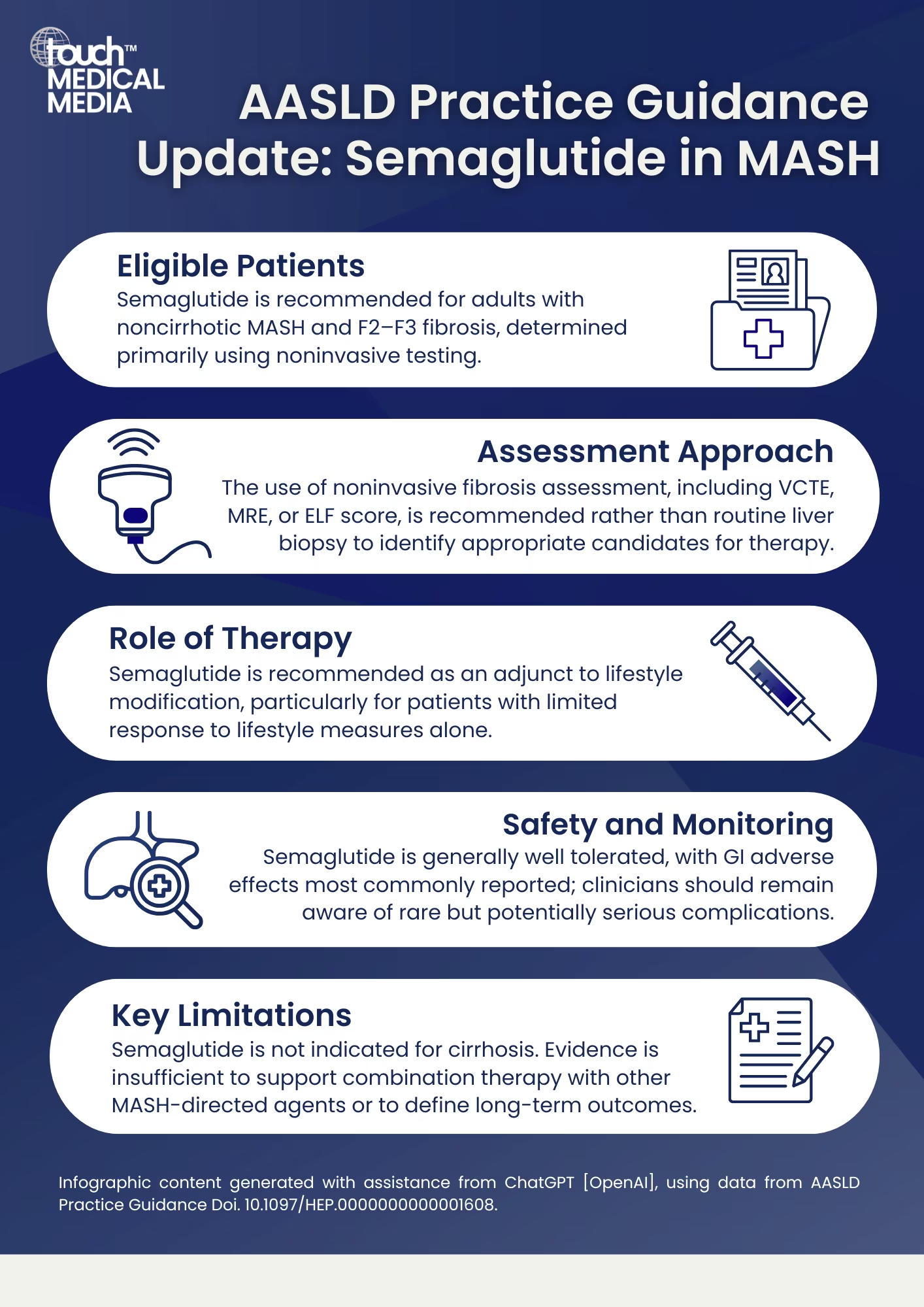
- AASLD recommends semaglutide for adults with MASH and fibrosis stages F2–F3, identified by noninvasive tests (NITs), such as VCTE (8–15 kPa), MRE (3.1–4.4 kPa), or ELF (9.2–10.5), instead of liver biopsy.
- For patients with VCTE (15-20 kPa), MRE (4.4-5 kPa), or ELF (10.5-11.3), the decision to treat with semaglutide should be based on exclusion of cirrhosis via a confirmatory NIT, cross-sectional imaging or platelet counts.
- Semaglutide is not approved for the treatment of patients with MASH cirrhosis (VCTE>20 kPa, MRE>5.0 kPa, ELF>11.3 and/or evidence of portal hypertension).
- Patients with compensated cirrhosis who are receiving semaglutide for another FDA-approved indication should be monitored.
2. Monitoring and Safety
- In the Phase 3 trial, semaglutide demonstrated a favourable hepatic safety profile with no discontinuations due to liver enzyme elevations. Routine hepatic panels are recommended, where indicated.
- Gastrointestinal effects, including nausea, diarrhoea, constipation and vomiting, were the most common adverse events.
- Clinicians should remain alert to rare but serious risks, including symptomatic gallbladder disease, pancreatitis, acute kidney injury, retinopathy progression, thyroid C-cell tumors, and lean mass loss.
- Dose titration is recommended to improve tolerability.
3. Concomitant therapy
- AASLD makes no recommendation regarding combination use of semaglutide and resmetirom, due to the absence of clinical trial data.
- Lifestyle modifications, including weight loss, nutrition optimisation, and physical activity, remain foundational in the management of MASH, with semaglutide as an adjunct.
Implications for clinical practice
- The inclusion of semaglutide represents a milestone in MASH management, offering clinicians a second treatment option, supported by robust histologic and metabolic outcomes.
- The emphasis on NIT-based fibrosis staging reduces reliance on liver biopsy, potentially expanding access to treatment while offering a more practical approach for patients.
- Further studies are required to establish long-term outcomes and to determine the optimal sequencing and combination of semaglutide with other MASH therapies.
Looking ahead
The updated AASLD practice guidance provides clear, practice-oriented parameters for incorporating semaglutide into the management of adults with noncirrhotic MASH and F2–F3 fibrosis, with an emphasis on noninvasive fibrosis assessment and careful patient selection. While the guidance remains appropriately cautious, it reflects a tangible shift in the treatment framework for MASH. Lifestyle modification continues to underpin management, but semaglutide introduces a second therapeutic option for patients who have limited response to lifestyle measures alone.
References
- Bansal M, Patton H, Morgan TR, et al. Semaglutide therapy for metabolic dysfunction-associated steatohepatitis: November 2025 updates to AASLD Practice Guidance. Hepatology. 2025; Doi: 10.1097/HEP.0000000000001608.
- American Association for the Study of Liver Diseases (AASLD). AASLD Announces Update to Metabolic Dysfunction‐Associated Steatotic Liver Disease (MASLD) Practice Guidance. 2025. [Press release]. Available at: https://www.aasld.org/aasld-announces-update-metabolic-dysfunction-associated-steatotic-liver-disease-masld-practice (accessed 12 December 2025).
- HCP Live. AASLD Releases Updated Practice Guidance on Semaglutide (Wegovy) for MASH. 2025. [Press release]. Available at: https://www.hcplive.com/view/aasld-releases-updated-practice-guidance-semaglutide-wegovy-mash (accessed 12 December 2025).
- hep©. AASLD Updates Practice Guidance for Fatty Liver Disease. 2025. [Press release]. Available at: https://www.hepmag.com/article/aasld-update-fatty-liver-disease-practice-guidance (accessed 12 December 2025).
- Kravchuk S, Bychkov M, Kozyk M, Strubchevska O, Kozyk A. Managing Metabolic Dysfunction-Associated Steatotic Liver Disease (MASLD) in the Digital Era: Overcoming Barriers to Lifestyle Change. Cureus. 2025;17:e84803.
Cite: AASLD adds semaglutide to MASLD practice guidance: Key updates. touchENDOCRINOLOGY. 17 December 2025.
Editor: Victoria Smith, Senior Content Editor.
Disclosures: This article was created by the touchENDOCRINOLOGY team utilizing AI as an editorial tool (ChatGPT (GPT-4o) [Large language model]. https://chat.openai.com/chat.) The content was developed and edited by human editors. No funding was received in the publication of this article.
SIGN UP to touchENDOCRINOLOGY!
Join our global community today for access to thousands of peer-reviewed articles, expert insights, and learn-on-the-go education across 150+ specialties, plus concise email updates and newsletters so you never miss out.