We are delighted to announce Dr Stefano Passanisi as a touchENDOCRINOLOGY Future Leader 2026, recognized by peers as an emerging leader in pediatric endocrinology.
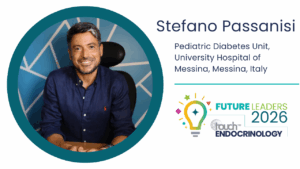
Dr Stefano Passanisi is a pediatrician and clinical researcher at the University Hospital of Messina, Italy. Working within a regional referral centre that cares for more than 500 children and adolescents with diabetes, Dr Passanisi combines clinical practice, research and medical education, with a particular focus on improving outcomes for young people living with diabetes.
His research interests centre on the clinical application of diabetes technologies, including automated insulin delivery systems, device-related skin complications and the psychosocial impact of diabetes management. His contributions to the field were recognized with the prestigious ISPAD Early Career Award in 2025. An active member of the International Society for Pediatric and Adolescent Diabetes (ISPAD), Dr Passanisi is also committed to supporting the next generation of clinicians and researchers through mentorship, international collaboration and educational initiatives.
In this interview, Dr Passanisi reflects on the experiences that inspired his career in pediatric endocrinology, discusses the milestones that have shaped his professional journey, and shares valuable advice for medical students and early-career healthcare professionals interested in pursuing a career in the specialty.
New insights are added regularly, covering a broad range of subspecialties and evolving clinical scenarios. Sign up below for Free Access to the latest clinical updates in your specialty!
What inspired you to pursue a career in pediatric endocrinology?
Pediatric endocrinology has fascinated me since my years in medical school. What attracted me most was the opportunity to care for children with chronic conditions and to accompany them and their families throughout a long journey of growth and development. In this field, the relationship goes far beyond medical care: over time, you build a bond based on trust, empathy and shared goals.
My main area of interest is type 1 diabetes, a discipline that is constantly evolving, particularly thanks to the remarkable progress in diabetes technology. Although my career is still relatively young, I have already witnessed the introduction of several innovations that have transformed diabetes management. These advances have not only improved glycemic outcomes in children and adolescents but, perhaps even more importantly, have significantly enhanced the quality of life of young people living with diabetes and their families.
What has been the most rewarding moment in your journey so far?
I have been fortunate to experience many rewarding moments throughout my career. Being invited to speak at international meetings and having the opportunity to collaborate with some of the leading experts in pediatric diabetology have been particularly meaningful milestones.
However, if I had to choose one moment, it would undoubtedly be receiving the ISPAD Early Career Award in 2025. That recognition made me reflect on the first steps I took in pediatric endocrinology and diabetes research and reminded me that passion, perseverance and dedication truly make a difference over time. It was a moment of great pride, but also a strong motivation to continue contributing to the advancement of our field.
What advice would you give to medical students or young professionals considering a career in pediatric endocrinology?
First, always greet children and their families with a smile. Scientific knowledge and technical skills are essential, but empathy and human connection remain at the heart of pediatric care.
Stay curious and keep up to date with the latest therapeutic and technological advances that can improve patient outcomes. Whenever possible, try to combine clinical practice with research. Although it requires time, commitment and energy, research broadens your perspective and ultimately helps you become a better clinician.
I would also encourage young professionals to look beyond their own institution. Build collaborations with national and international centers, participate in specialist training programs, join scientific societies and become actively involved in conferences and professional networks. These experiences can open unexpected doors and foster both personal and professional growth.
Most importantly, be enthusiastic. Having the opportunity to reduce the burden of disease and improve the lives of children is a rare privilege. Never lose sight of that.
More content in pediatric endocrinology.
Cite: Dr Stefano Passanisi on innovation, research and compassionate care in pediatric diabetes: touchENDOCRINOLOGY Future Leaders 2026. touchENDOCRINOLOGY. September 2026.
Disclosures: This short article was prepared by touchENDOCRINOLOGY in collaboration with Dr Passanisi. No fees or funding were associated with its publication.
Editor: Carla Junkier, Editorial Director.