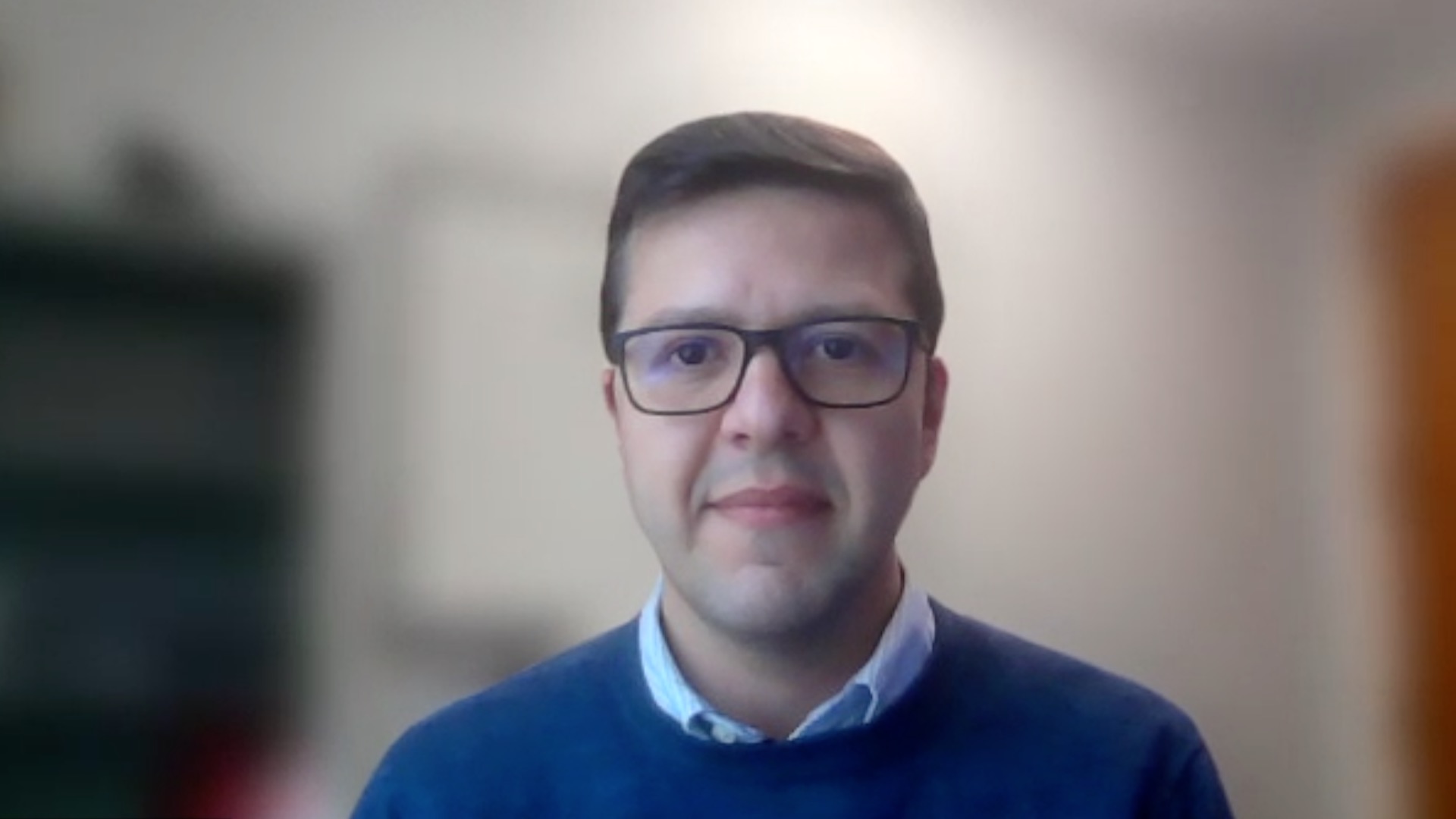
EASD 2026 takes place in Milan from September 28 to October 2, bringing together the global diabetes community to explore new research, clinical advances and developments shaping the future of diabetes care. Ahead of the meeting, EASD President Francesco Giorgino shares his perspective on the key themes and developments to watch.

Ahead of the EASD 2026 Annual Meeting in Milan, touchENDOCRINOLOGY spoke with EASD President Professor Francesco Giorgino about the key themes shaping this year’s program and his priorities for the year ahead. In this exclusive Q&A, he discusses emerging advances in incretin-based therapies, type 1 diabetes, AI and diabetes technology, as well as the evolving role of screening, personalized care and guideline implementation. He also shares his vision for EASD during his presidency, including strengthening research translation and collaboration with people living with diabetes.
New insights are added regularly, covering a broad range of subspecialties and evolving clinical scenarios. Sign up below for Free Access to the latest clinical updates in your specialty!
This will be your first EASD Annual Meeting as President. What are you most looking forward to at this year’s meeting, and which areas of the program do you expect to generate the most discussion?
The EASD Annual Meeting is a unique opportunity to bring people from all over the world together to discuss diabetes research and clinical practice. What I’m looking forward to most are the countless small encounters – the moments where people meet, talk and connect to advance the field. That personal connection is often the essential ingredient, and it matters more than ever today, when so much of the public conversation is dominated by extremes. There is no scientific progress without genuine, open exchange.
In terms of the program, I expect GLP-1 receptor agonists and related mechanisms to remain one of the hottest topics. This class of drugs continues to show benefits well beyond glycemic and weight control, on cardiovascular and other organ health, and with multiple receptor agonists now in the pipeline, we will see further advances in the years ahead. Unpublished data from several trials in this area will be presented at this year’s meeting, and I expect those sessions to generate considerable discussion.
Artificial intelligence (AI) and diabetes technology will be other major themes, not least because of the pace at which AI is now advancing both the tools themselves and the way we manage diabetes and its complications within healthcare systems.
Beyond these two areas, I would also point to type 1 diabetes as a field generating real momentum this year. We will hear about genetic risk scores for type 1 diabetes and how they might be applied clinically, about stem cell-derived islet transplantation moving into clinical trials, and about continued progress in antigen-specific immunotherapies aimed at delaying or preventing the disease. I think this is an area where the discussions in Milan could be particularly forward-looking.
What key developments in diabetes research and clinical care do you expect to be highlighted at EASD 2026?
There is a lot to highlight, but I would draw attention to a few themes that run through the program.
First, the incretin field continues to evolve very quickly. We will see full results from major cardiovascular outcome and efficacy trials – including the TRIUMPH-2 trial of retatrutide in people with obesity and type 2 diabetes, and the SYNCHRONIZE phase 3 program on the dual GLP-1/glucagon receptor agonist survodutide – alongside new data on next-generation oral agonists, such as orforglipron, and other multi-receptor agents. Together, these will sharpen our understanding of how far this class of drugs can go, not only for glycemic control but for cardiovascular, renal and hepatic protection.
Second, type 1 diabetes is very much in focus this year. Across the week we will hear about the clinical application of type 1 diabetes genetic risk scores, early trial data on stem cell-derived islet transplantation, and continued follow-up of immunotherapy approaches – all pointing towards a shift from purely reactive management to earlier detection and, potentially, disease modification.
Third, EASD’s second guideline, this time on CGM in type 2 diabetes, will be presented in full.
Fourth, sessions on the cardiovascular-kidney-liver-metabolic interplay and on precision medicine reflect how the field is moving towards more integrated, personalized approaches in diabetes management.
And finally, there will be the release of the updated ADA–EASD Consensus on the management of type 2 diabetes, introducing a new treatment paradigm that prioritizes the early use of GLP-1–based therapies and SGLT2 inhibitors in this population.
Taken together, I think delegates leaving Milan will have a clear sense that diabetes care is moving faster, earlier and more precisely than ever before.
With rapid advances in new diabetes therapies, glucose monitoring and other technologies, what developments do you think have the greatest potential to change clinical practice?
We already have the tools. What will really change clinical practice is putting people living with diabetes at the center of how we use them. Healthcare providers need to listen and match the right tool to each patient’s needs; that, to me, is what personalized care actually means in practice.
For that to happen at scale, healthcare systems need the resources to offer the full toolbox to every patient who needs it, and this is an area where EASD is actively engaged: working to align on best practice and support implementation across Europe.
Screening is another crucial piece of the puzzle. EU Screening Week, launching on 28 September 2026, will put a spotlight on exactly this. If we can identify diabetes, and the risk of its complications, earlier, we can avoid a great deal of costly complications and irreversible harm further down the line. That shift – from a reactive to a proactive approach – is probably the single change with the greatest potential to transform clinical practice.
Looking beyond this year’s meeting, what would you like to see EASD achieve during your presidency?
EASD is already a strong and prestigious organization, with several activities involving scientific exchange and networking, high-quality medical education, research, training and the dissemination of all of that work. That is an enormous asset, and my first priority is to preserve it – and, where possible, to build on it.
At the same time, I think there are some new directions worth pursuing. Through funding provided via our foundation, EFSD, we support research carried out by individual researchers and small groups, but as an organization we do not generate research data ourselves, and we are still not as effective as we should be at translating the knowledge gained through research into clinical practice. These are two important challenges I would like us to address during my presidency.
I would also like to build further on our work developing guidelines and consensus documents. We see these as a body of evidence that should shape clinical practice, so it’s important that we not only continue to develop and disseminate them, but also find better ways to evaluate how far they are actually being translated into practice – particularly in parts of the world where that is harder to achieve.
Finally, I would like to strengthen our collaboration with organizations representing, and people living with, diabetes, and to establish some shared initiatives. This could, for example, help make the Annual Meeting program more attractive and more relevant to a wider audience – if we bring in input not only from scientists and clinicians but also from all healthcare professionals and patient organizations, we can identify messages and solutions that resonate more broadly.
These are just some of the ideas for how EASD’s already rich and diverse activities could be developed further in the years ahead.
Francesco Giorgino
Francesco Giorgino, M.D., Ph.D. is a Professor of Endocrinology and Chairman of the Department of Precision and Regenerative Medicine and Ionian Area at the University of Bari Aldo Moro, Bari, Italy. He is also Chief of the Division of Endocrinology at the University Hospital Policlinico Consorziale in Bari.
Francesco Giorgino is the President of the European Association for the Study of Diabetes (EASD), served as Italian Delegate for the European Commission’s (COST) actions on diabetes and was President of the Italian Society of Endocrinology (2019-2021).
Francesco Giorgino received his Ph.D. degree from the University of Naples Federico II, in Italy and later worked at the Joslin Diabetes Center and Harvard Medical School in Boston, MA, USA, as a postdoctoral research fellow and visiting scientist (1990-1994).
His research interests include the mechanisms of insulin resistance and beta-cell dysfunction in type 2 diabetes mellitus, the pathophysiology of adipose tissue, and the pharmacological modulation of insulin action and beta-cell function.
EASD Annual Meeting 2026
 The 62nd Annual Meeting of the European Association for the Study of Diabetes (EASD) is set to take place from 28 September to 2 October 2026 at the Allianz MiCo – Milan Convention Centre in Milan, Italy. This global diabetes conference will convene thousands of delegates from across the globe to explore the latest advancements in diabetes research, treatment, and care.
The scientific program will feature hundreds of presentations, including keynote lectures, symposia, and oral sessions, offering insights into cutting-edge developments in both basic and clinical diabetes research. Attendees will have the opportunity to engage with leading experts, fostering collaboration and knowledge exchange across the international diabetes community.
This short article was produced by touchENDOCRINOLOGY in collaboration with Professor Francesco Giorgino. Views expressed are the speaker’s own and do not necessarily reflect the views of Touch Medical Media.
This article was created by the touchENDOCRINOLOGY team utilizing AI as an editorial tool (ChatGPT [Large language model]. https://chat.openai.com/chat.) The content was developed and edited by human editors. No funding was received in the publication of this article.
Cite: EASD 2026: Francesco Giorgino on key advances in diabetes research and care. touchENDOCRINOLOGY. September 2026
Editor: Carla Junkier, Editorial Director.